Roysambu, Kasarani
Call: +254 723 786161 / +254 735 981098 | ISO 9001:2015


NOTIFICATION
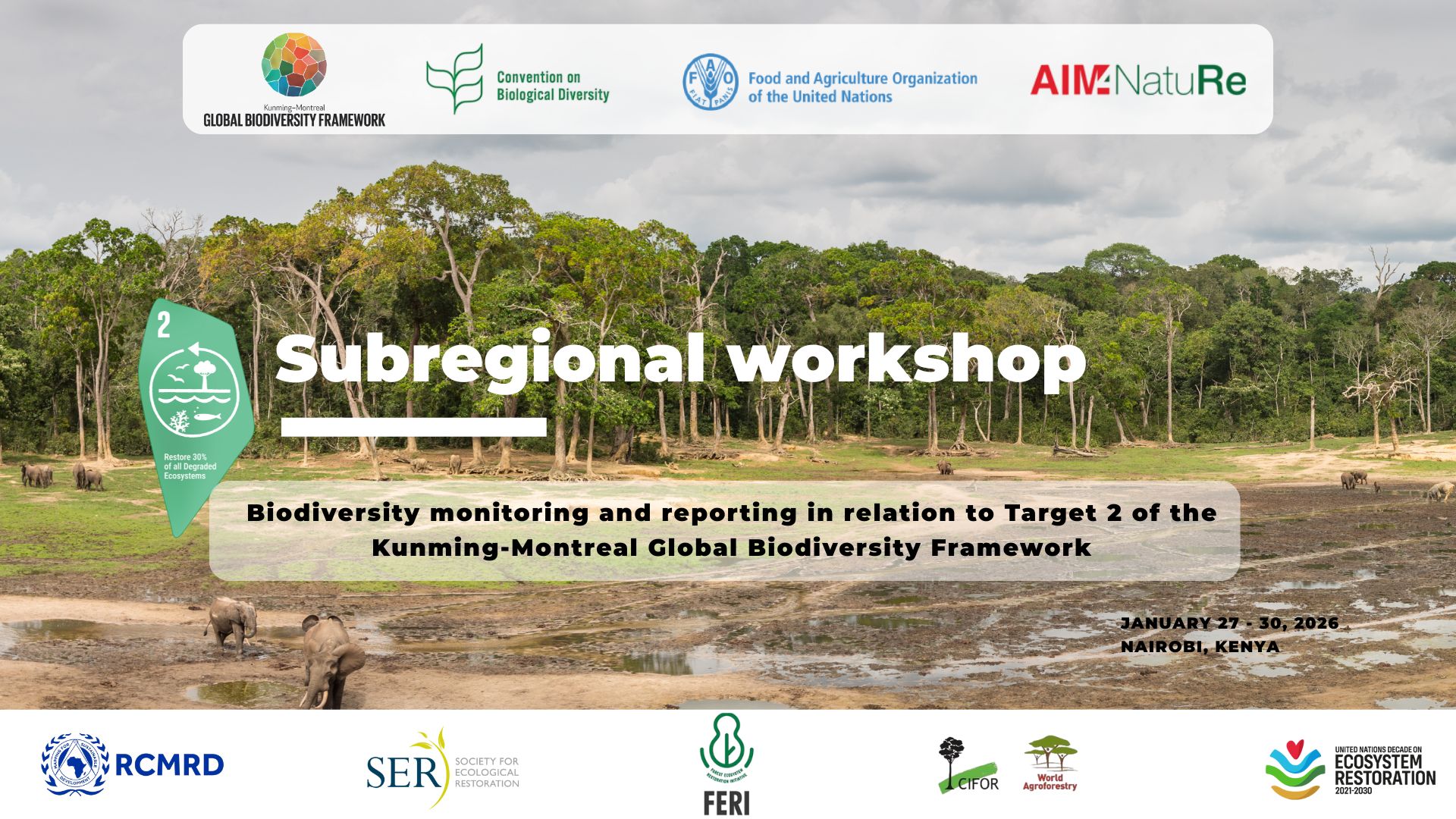
Subregional workshop on biodiversity monitoring and reporting in relation to Target 2 of the Kunming-Montreal Global Biodiversity Framework
27 to 30 January 2026 - Nairobi, Kenya
Dear Sir or Madam,
We are pleased to announce that a subregional workshop on biodiversity monitoring and reporting in relation to Target 2 of the Kunming-Montreal Global Biodiversity Framework will be held in Nairobi, Kenya, from 27 to 30 January 2026.
The workshop is co-organized by the Food and Agriculture Organization of the United Nations, the Regional Centre for Mapping of Resources for Development (RCMRD) and the Secretariat of the Convention on Biological Diversity (CBD). Representatives from countries covered by RCMRD, in its function as subregional technical and scientific cooperation support centre, as well as representatives of other support centres (https://www.cbd.int/tsc/tscm/subregionalcentres) in Africa are invited to participate in the workshop.
The workshop supports the participating countries to accelerate monitoring and reporting on ecosystem restoration in the context of Target 2 of the Framework and offers the opportunity to share subregional, national and local experiences and challenges in this regard. The workshop includes a training of trainers for the representatives of the support centres of the African region. Furthermore, RCMRD will officially launch its role as subregional technical and scientific cooperation support centre and the establishment of its steering committee.
We are pleased to invite relevant Parties to nominate two representatives to participate in the workshop. It is advised that one nominee be the national focal point for the CBD, or a government official responsible for leading the work on preparing the seventh national report, and the second nominee be an expert in ecosystem restoration, while taking into account gender balance. Other subregional technical and scientific cooperation support centres in Africa are also invited to nominate one representative to attend the workshop and the training of trainers session.
Pursuant to the above, kindly submit your nomination in the form of a letter signed by the national focal point of the Convention or the Head of the competent authority. Nominations should include a completed HR Mini Master Registration Form (https://www.cbd.int/doc/notifications/2025/ntf-2025-142-ecosystem-annex-en.docx) for the nominee and a copy of the bio-page of their valid national passport, and should be sent by e-mail to
Participants eligible for funding will be provided with air travel and daily subsistence allowance to cater for incidental costs according to UN rules. Participation of eligible participants may be facilitated by other partner organizations, involving specific travel arrangement procedures. Relevant information will be communicated to eligible participants following receipt of the nominations.
The workshop will be held in English. Information and documents relevant to the workshop will be made available in due course.
To contribute to the discussions, the co-organizers will also invite a limited number of representatives of relevant organizations, Rio Conventions and major stakeholder groups.
We look forward to receiving nominations for the workshop at the earliest opportunity.
Please accept, Sir, Madam, the assurances of our highest consideration.
|
(signed) Astrid Schomaker Executive Secretary Secretariat of the Convention on Biological Diversity |
(signed) Emmanuel Nkurunziza Director General Regional Centre for Mapping of Resources for Development |
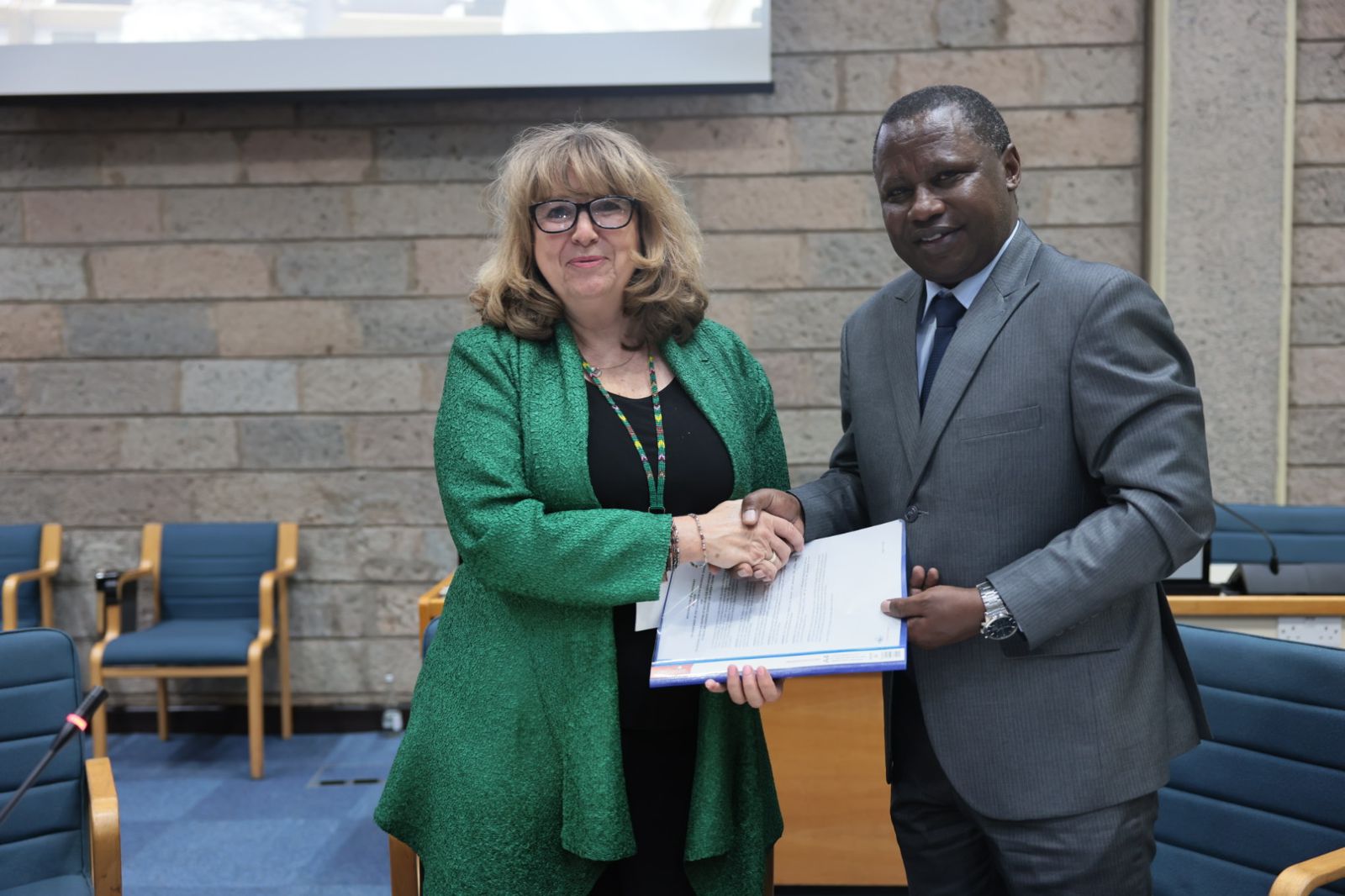
The Regional Centre for Mapping of Resources for Development (RCMRD) has been officially designated as a Technical and Scientific Cooperation Support Centre (TSCC) under the Convention on Biological Diversity (CBD).
This milestone was marked by the signing of a host agreement between RCMRD and the CBD Secretariat during the 20th session of the African Ministerial Conference on the Environment (AMCEN), held on July 18, 2025.
This designation places RCMRD at the heart of regional efforts to implement the Kunming-Montreal Global Biodiversity Framework (KMGBF), specifically supporting Eastern and Southern African countries in their biodiversity conservation goals.
The designation of RCMRD as a TSC signifies international recognition of the Centre’s role in:
RCMRD joins a network of 18 TSCs globally, including five in Africa: OSS, COMIFAC, CSE, SANSI, and now RCMRD. This network demonstrates growing momentum for South-South cooperation, fostering regional innovation and partnerships grounded in shared challenges and opportunities.
This means that as a newly designated TSC, RCMRD will serve as a regional hub for technical and scientific support in biodiversity and ecosystem management. This means:
RCMRD will also play a proactive role in facilitating knowledge exchange across African countries, contributing to the co-development of tools, regional assessments, and community engagement models aligned with the KMGBF. The countries that are covered by our sub regional TSC support centres in Africa. They include: Comoros, Eswatini, Ethiopia, Kenya, Madagascar, Rwanda, Somalia, South Sudan, Tanzania, Uganda, and Zambia.
“This designation reaffirms our commitment to supporting African countries with the technical capacity they need to meet global biodiversity targets. We are honoured to join this network of Centres working to safeguard nature through data, science, and collaboration,” said Dr. Emmanuel Nkurunziza, Director General, RCMRD.
RCMRD’s designation comes at a time of renewed urgency and opportunity for biodiversity action. As nations align their policies and strategies with the KMGBF, institutions like RCMRD will be instrumental in translating global ambitions into regional and national progress.